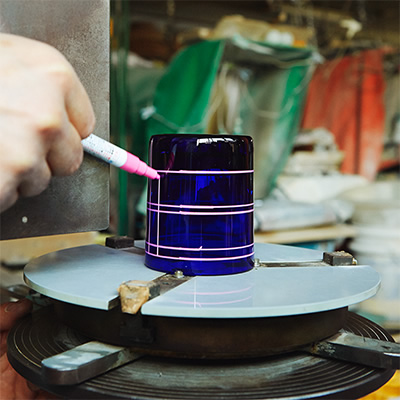
割り出し
Waridashi
カットの目安となる縦横の印を付ける。
Vertical and horizontal marks are placed as guidelines for the cuts to be made.
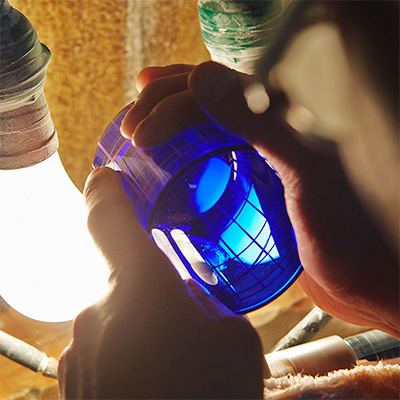
粗摺り
Arazuri
ダイアモンドホイールに水をつけながら硝子を削り、大まかなデザインを決めていく。
The glass is cut using a wet diamond wheel to decide the rough outline of the design.
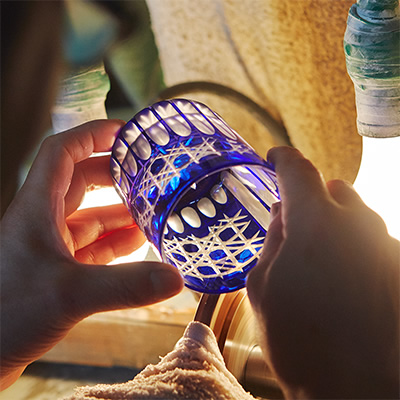
三番掛け
Sanbangake
ダイアモンドホイールに水をつけながら粗摺りをもとに、より細かくなめらかなカットを施す。
More detailed, smooth cuts are done based on the rough outline performed at the Arazuri stage.
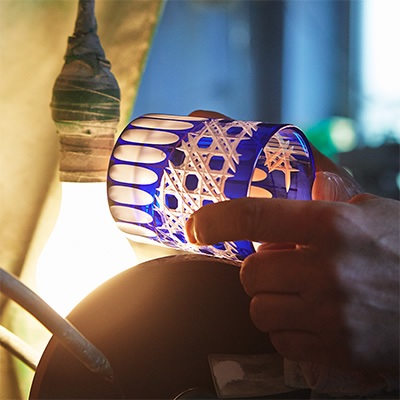
石掛け
Ishikake
人工砥石や天然石に水を付けながら加工し、カット面をよりなめらかに仕上げていく。
Artificial whetstones and natural stones are processed while applying water, and the surface with cuts are made smoother.
磨き
Migaki
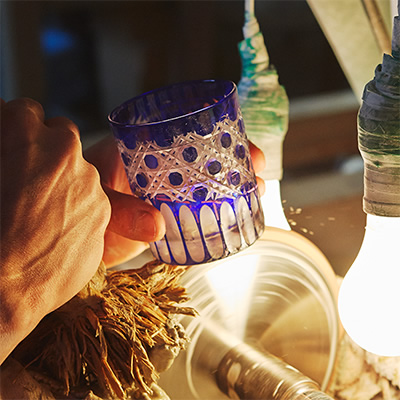
木盤や樹脂系パッド等に水溶きした研磨剤をつけてカット面の光沢をだす。薬品に浸して光沢をだす(酸磨き)方法もある。
The cut surface is polished by applying dissolved abrasives on a rotating wooden disk or resin-type pad. There is another method where luster is given by soaking the glass in a chemical (acid polishing).
バフ掛け
Bafugake
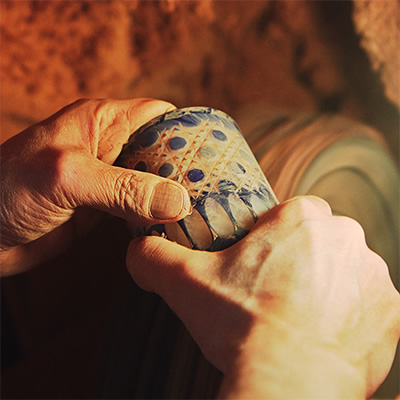
フェルトや綿など繊維の回転盤に研磨剤として酸化セリウムを水溶きしたものをつけ、磨きの仕上げをする。
The glass is polished by applying dissolved cerium oxide as an abrasive onto the rotating disk of textile such as felt and cotton.